
The Drum - news from The Monitoring Group
You can never make an analysis of the oppressed in any aspect of their lives and leave out the oppressor. If you do so, you’ll blame the oppressed for their condition. Kwame Ture
The Drum newsletter is a call for action on the critical issues faced today by communities of African Caribbean, Asian and other people of colour nationally in the UK and internationally. It welcomes multi-media contributions - articles, podcasts, videos and photography on racism and discrimination, authoritarianism, fascism, the far-right and human rights from a grassroots perspective. Academic and theoretical papers will also be considered for publication.
*Content from The Monitoring Group’s archived “Publications” section can be viewed here.
New: Launch of Nottingham Solidarity Network
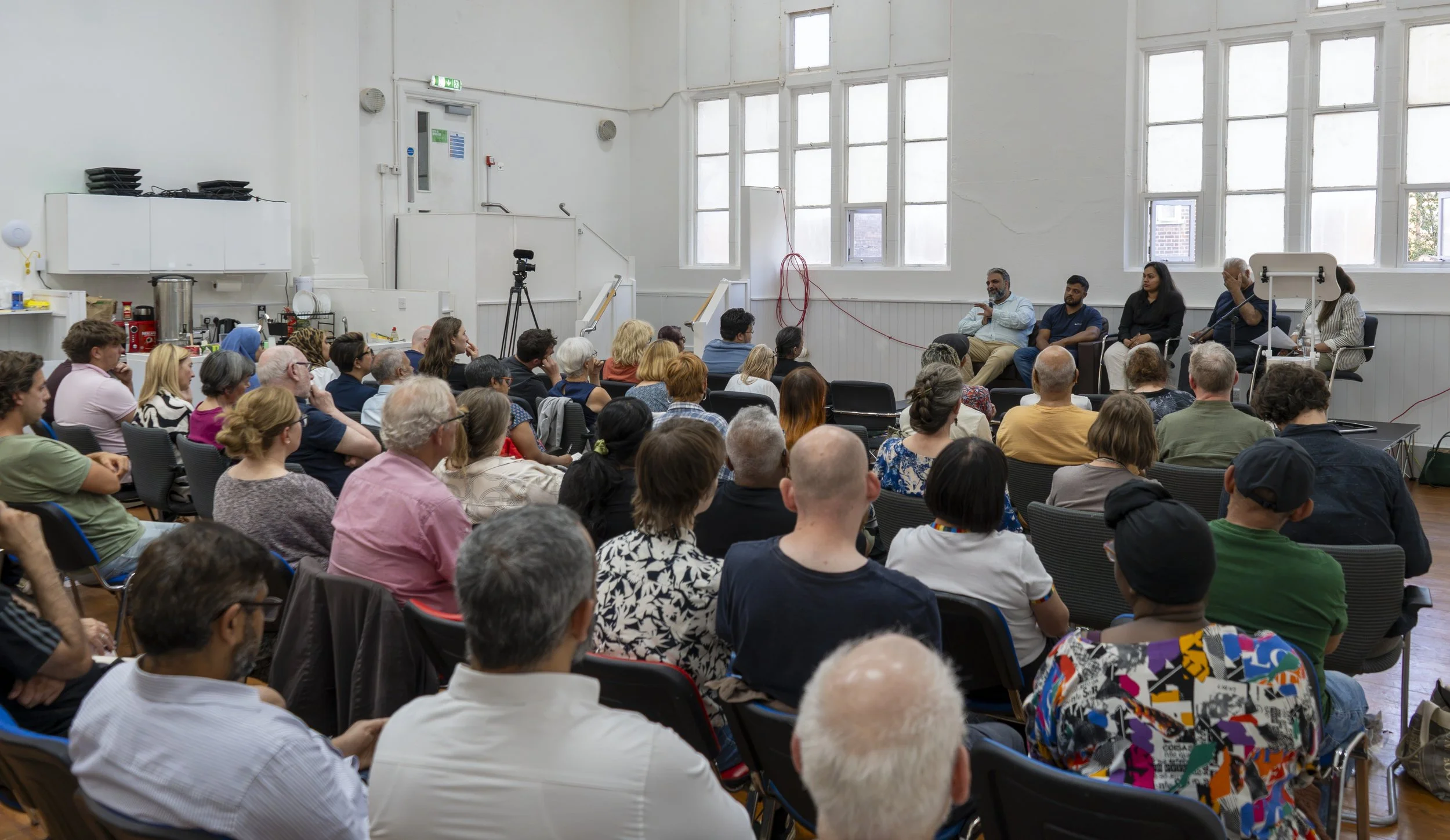
It was great to welcome more than 90 people from across Nottinghamshire for the recent launch of The Monitoring Group’s Nottingham Solidarity Network, writes Rohan Patel, a Community Organiser for the UK charity . The successful event brought together community organisations, campaigns, trade unions, faith groups and local residents for an evening of discussion about solidarity, organising and how we respond collectively to the challenges facing our communities. Just as importantly, it was inspiring to see so many people stay behind afterwards, making new connections, exchanging ideas and starting conversations about how we can continue working together.
Speakers Suresh Grover, The Monitoring Group’s National Coordinator and founder, Taj Ali, writer and historian, Sajid Mohammed, Councillor and head of the Nottingham Himmah Hub charity, Sharmen Rahmen, Equality and Diversity spokesperson for the Green Party and Jagdish Patel, Project and Development Manager at The Monitoring Group shared their time and invaluable experiences with an engaged and appreciative audience.
It was encouraging to see such a diverse range of organisations and individuals in the same room, with thoughtful discussion and a genuine willingness to work together.
Our July launch was only the first step as we work to build a practical network that unifies people and organisations to strengthen relationships, support one another and organise collectively around the issues affecting our communities across Nottinghamshire.
What happens next?
One of the strongest messages from the evening was that the Nottinghamshire Solidarity Network should be shaped by the people involved. To take this forward, we'll be holding a strategy workshop in September, where we'll develop a shared vision, agree the Network's priorities and identify the next steps.
We'd love to hear from you If you'd like to help shape the future of the Nottinghamshire Solidarity Network, please take a few minutes to complete the short form below. These conversations will help us build relationships, connect people with shared interests, and ensure the Network is shaped by the people involved from the very beginning.
Important themes reproduced below, reflect the ideas which emerged during the audience discussion. They are intended as a starting point for shaping the future of the Nottinghamshire Solidarity Network together:
Defining solidarity together: Developing a shared understanding of solidarity to guide the Network's values, priorities and activities.
Legal support: Developing work around hate crime, human rights, advocacy, practical assistance and community-led support.
Arts, culture and solidarity: Using arts and cultural activity to build relationships, strengthen communities and challenge racism and division.
A Nottinghamshire Solidarity Network newsletter: Sharing community news, campaigns, opportunities and events. If you or your organisation are organising an activity, campaign or event, we'd love to help promote it.
Protecting dialogue and solidarity: Responding to the criminalisation of dialogue, dissent and solidarity, while supporting affected individuals and communities.
Community power and collective leadership: Exploring approaches to community organising, leadership and building collective power.
Connecting people and places: Strengthening relationships between people, organisations and community centres to share information, coordinate action and reduce isolation.
Challenging far-right narratives: Developing practical ways to challenge racism, Islamophobia and division.
Education: Working together to address discrimination and exclusion while supporting more inclusive approaches to education.
If you know an organisation, community group or individual who should be involved in the Network, or if you'd like to promote an event, campaign or initiative, we'd love to hear from you.
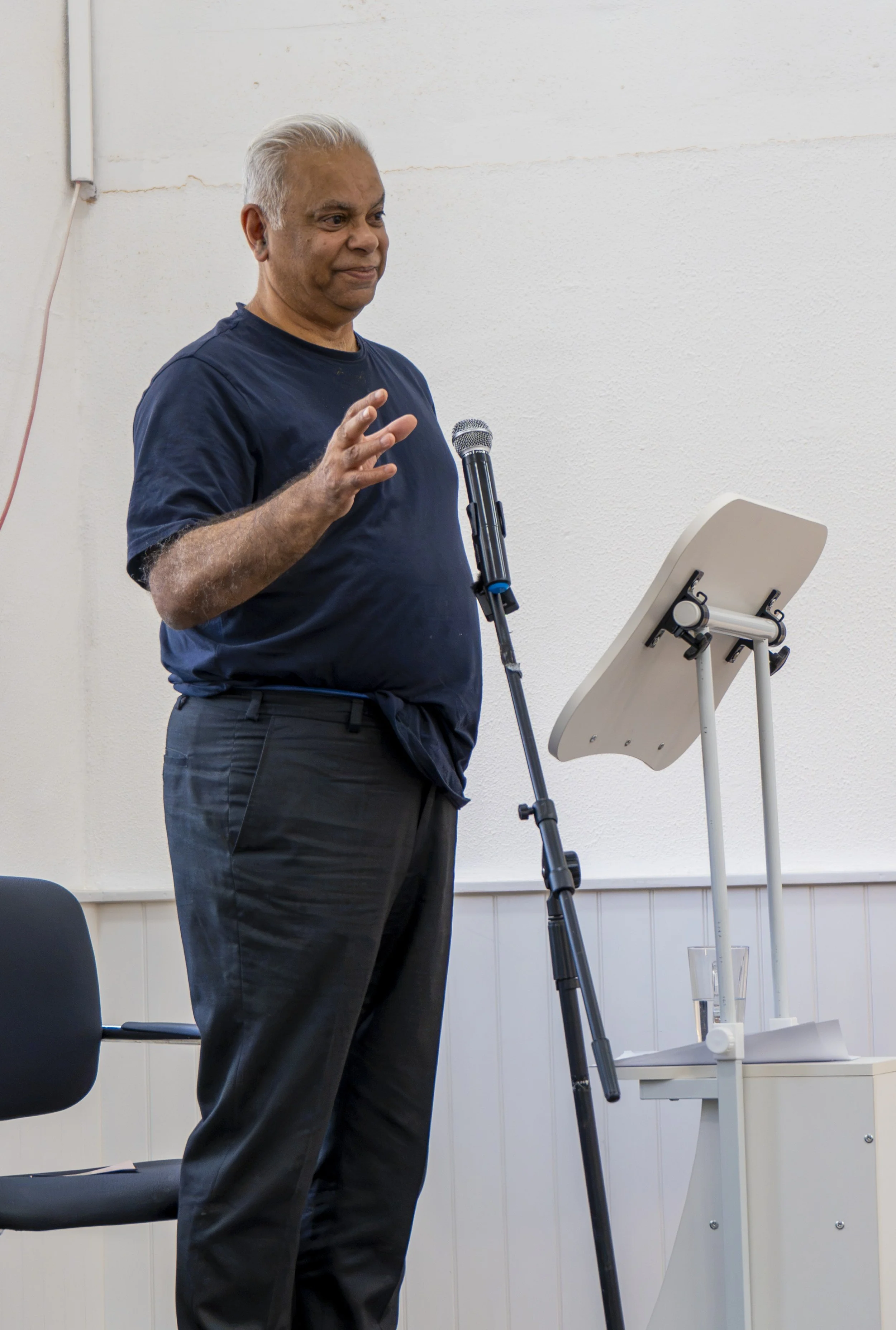
Suresh Grover, National Coordinator and founder of The Monitoring Group
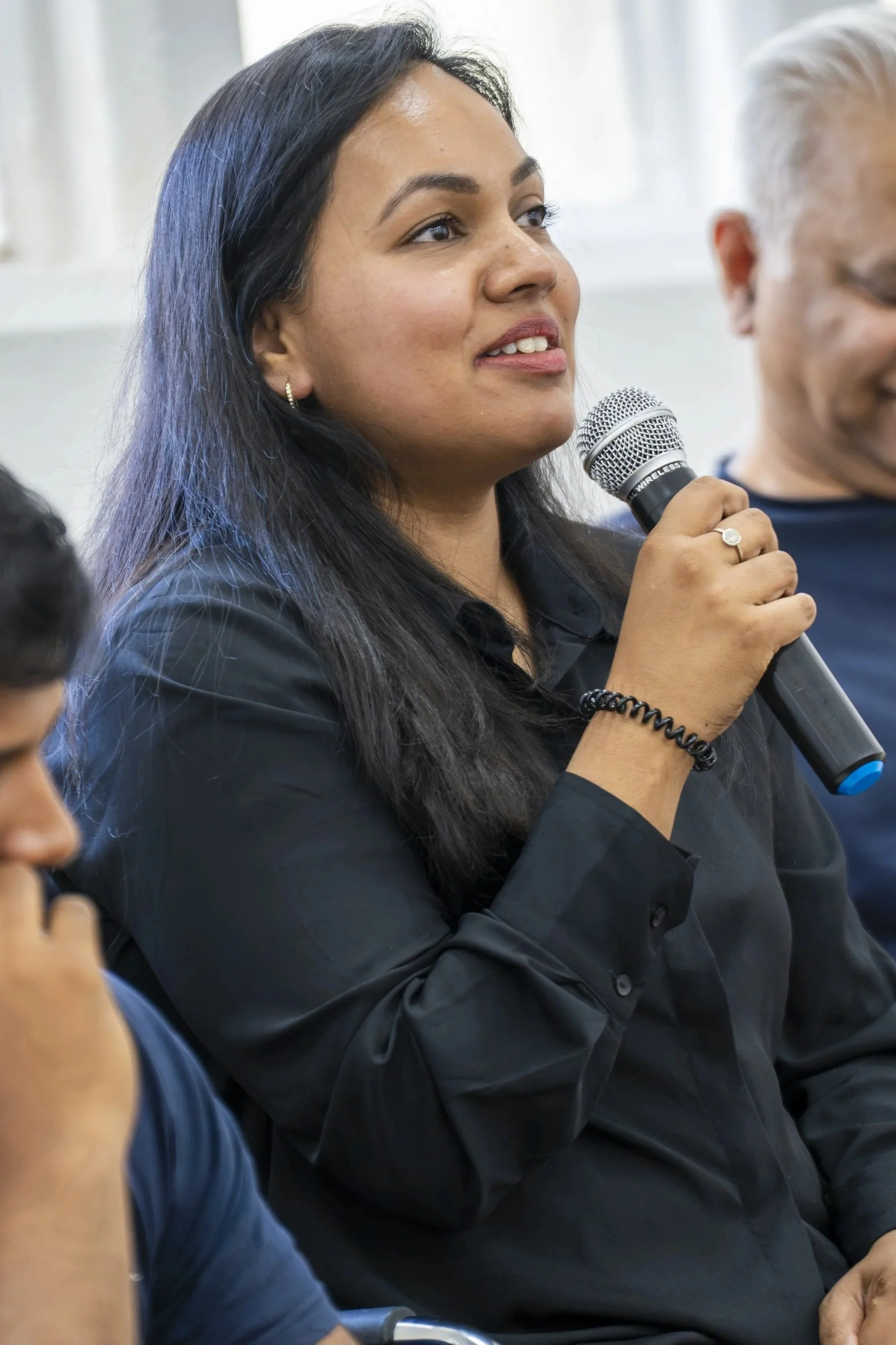
Sharmen Rahmen, Green Party Equality and Diversity spokesperson
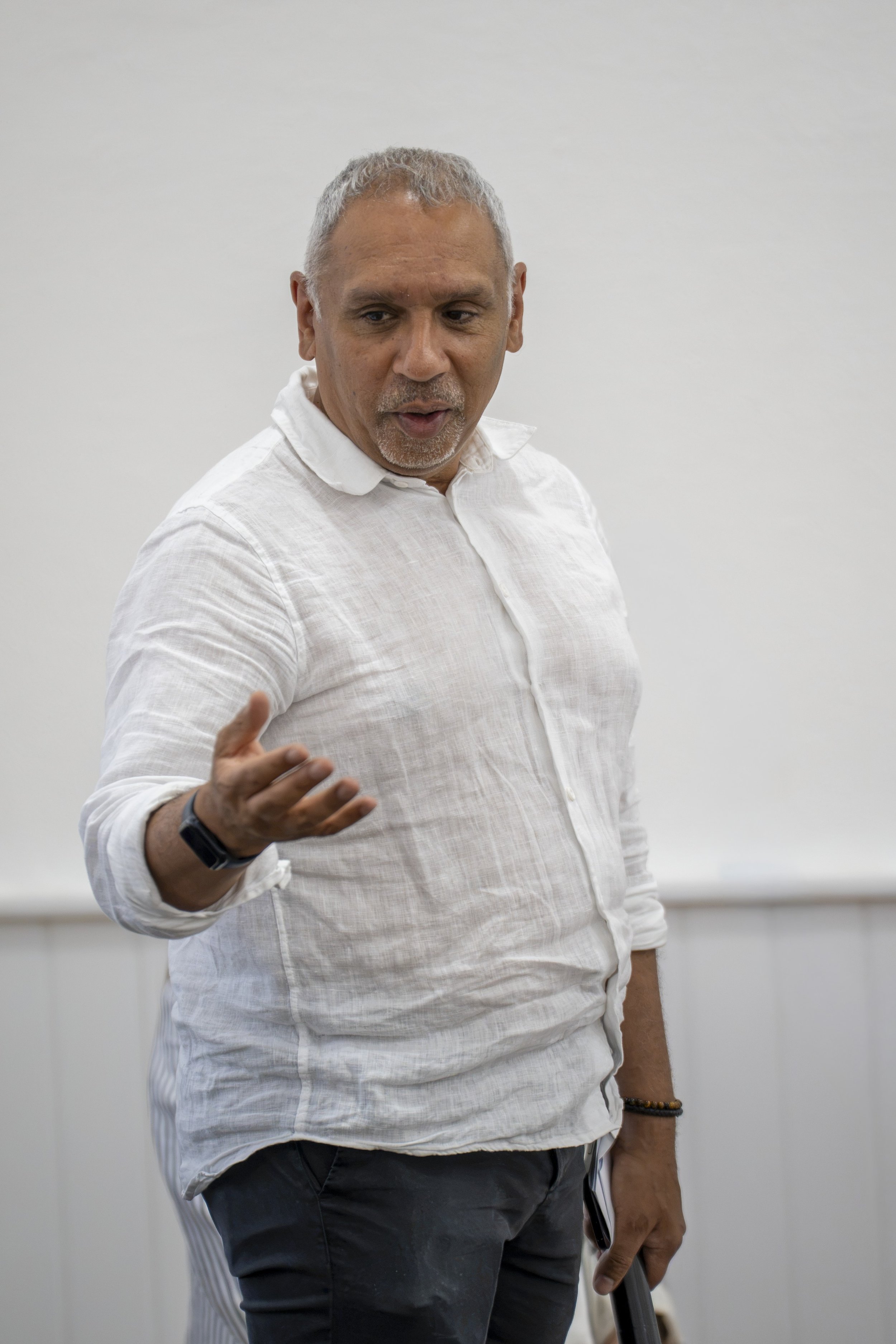
Jagdish Patel, Project and Development Manager at The Monitoring Group
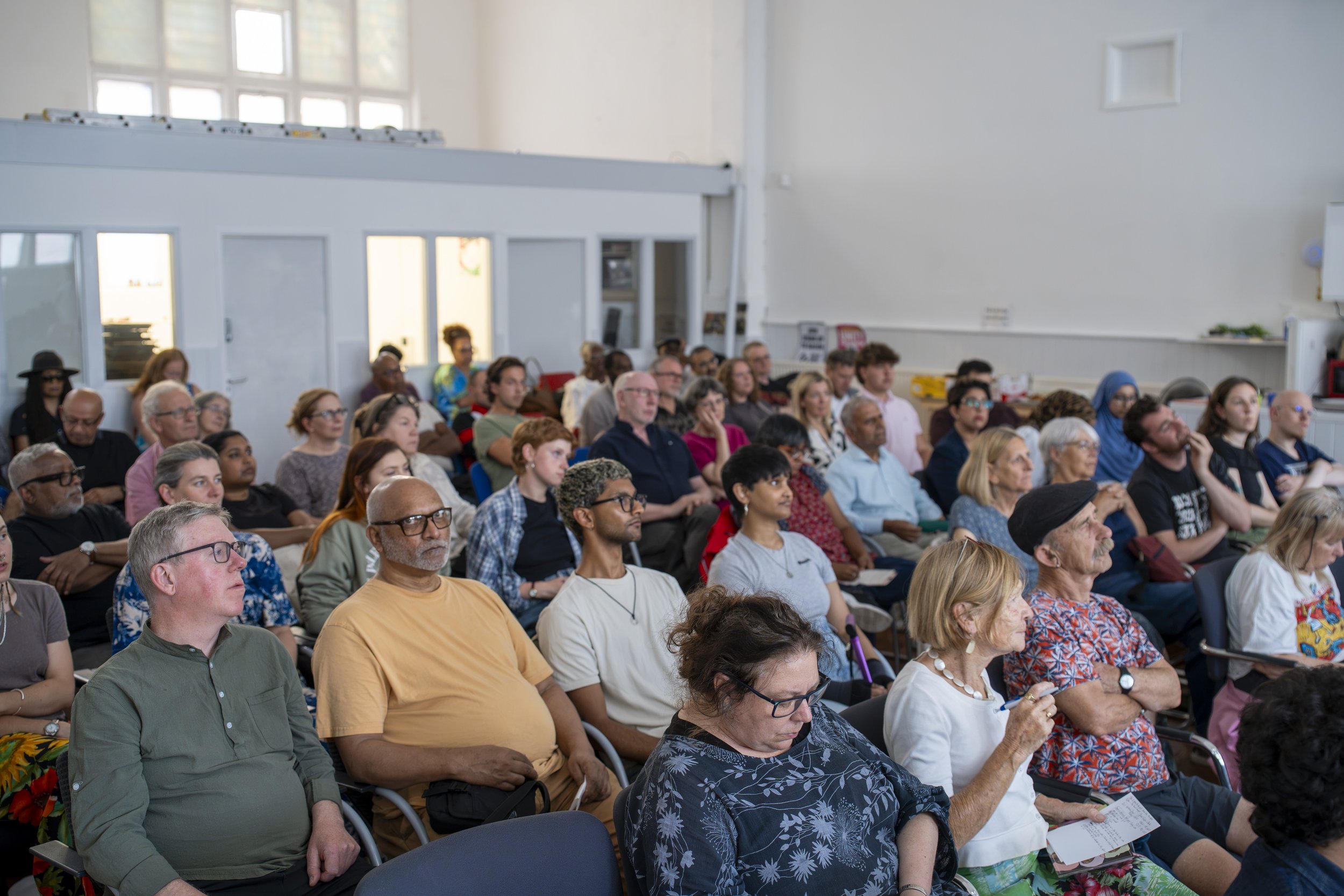
Nottingham Solidarity Network launch event attendees
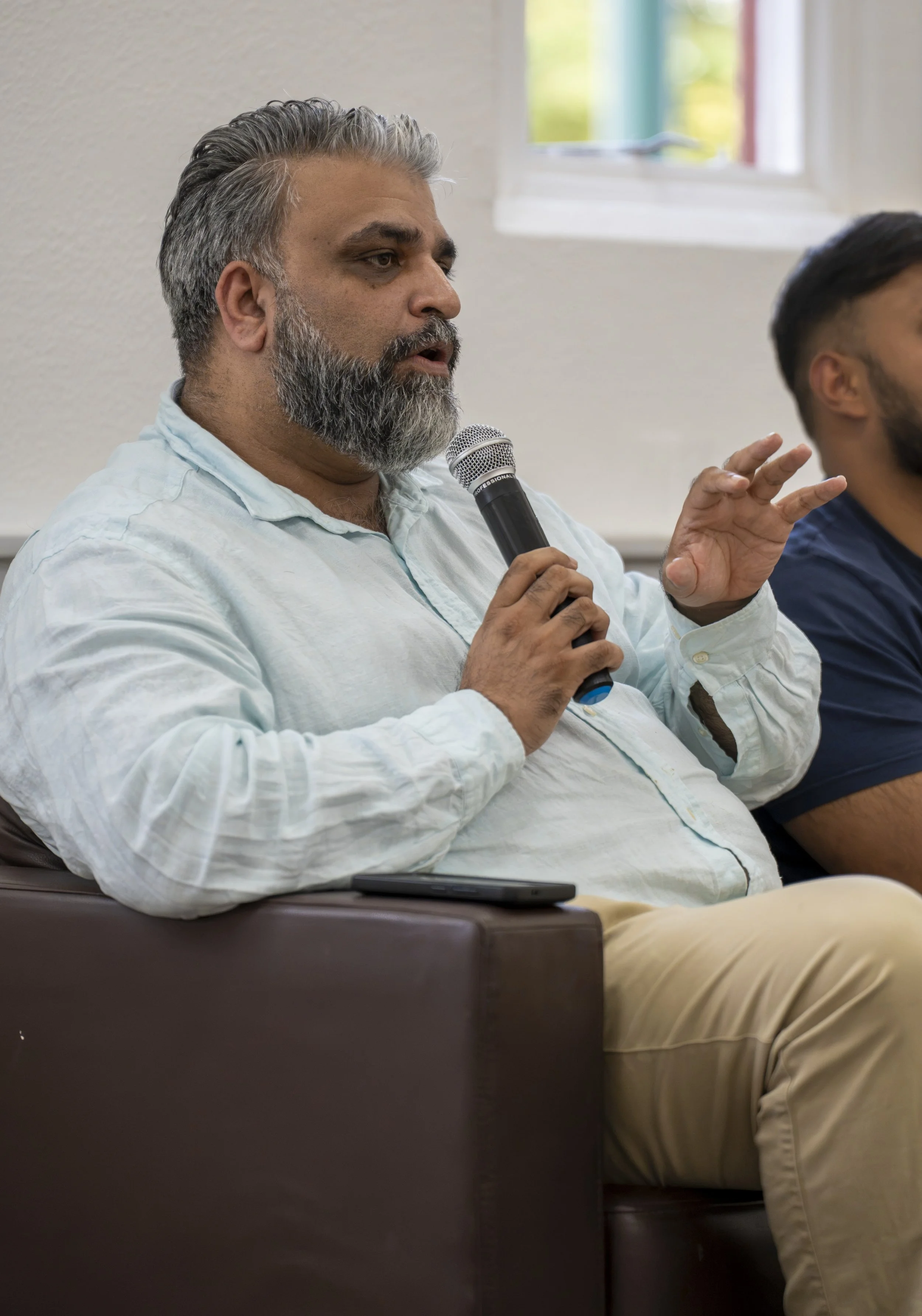
Councillor Sajid Mohammed speaking at the Nottingham Solidarity Network meeting
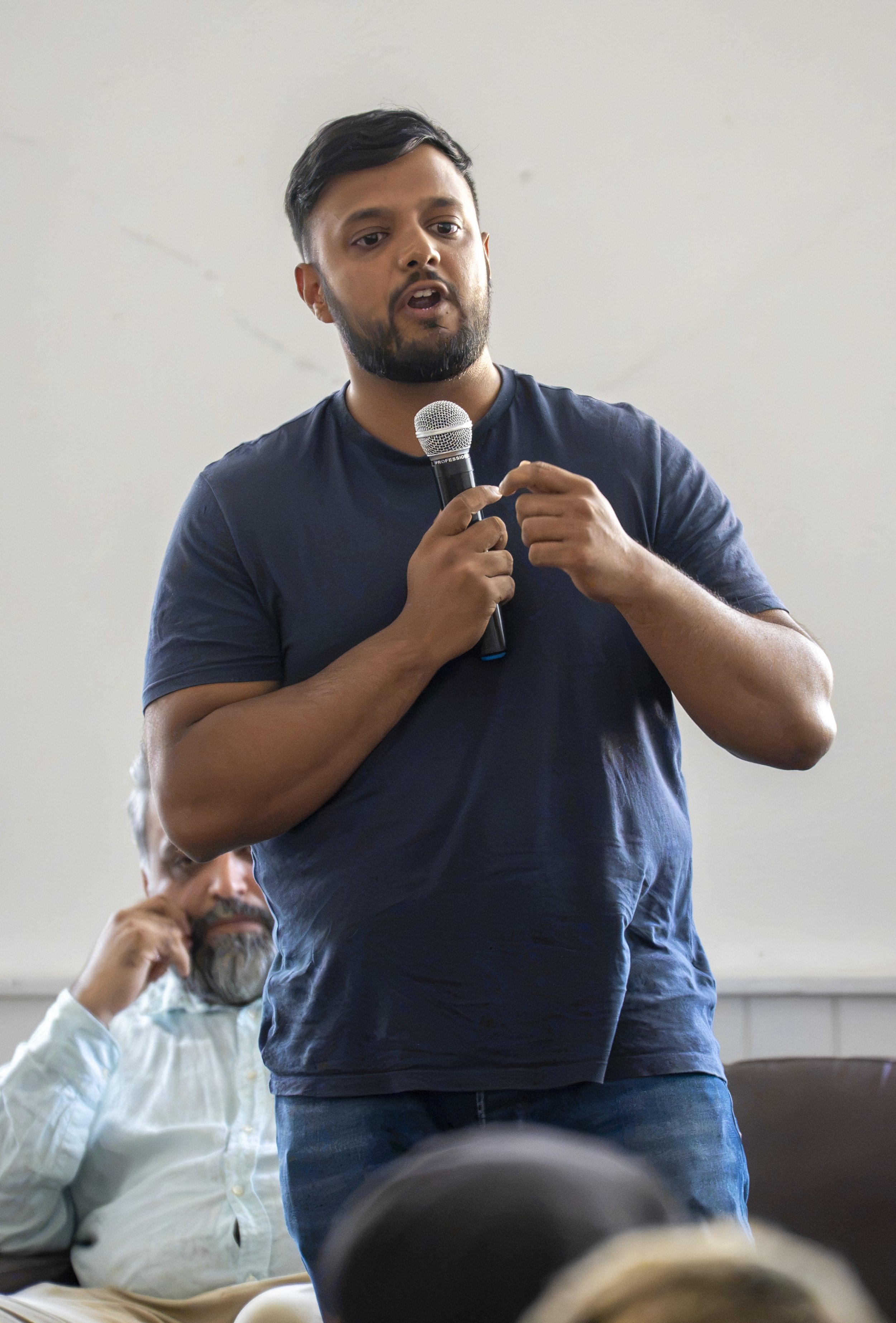
Writer and historian Taj Ali addresses the meeting
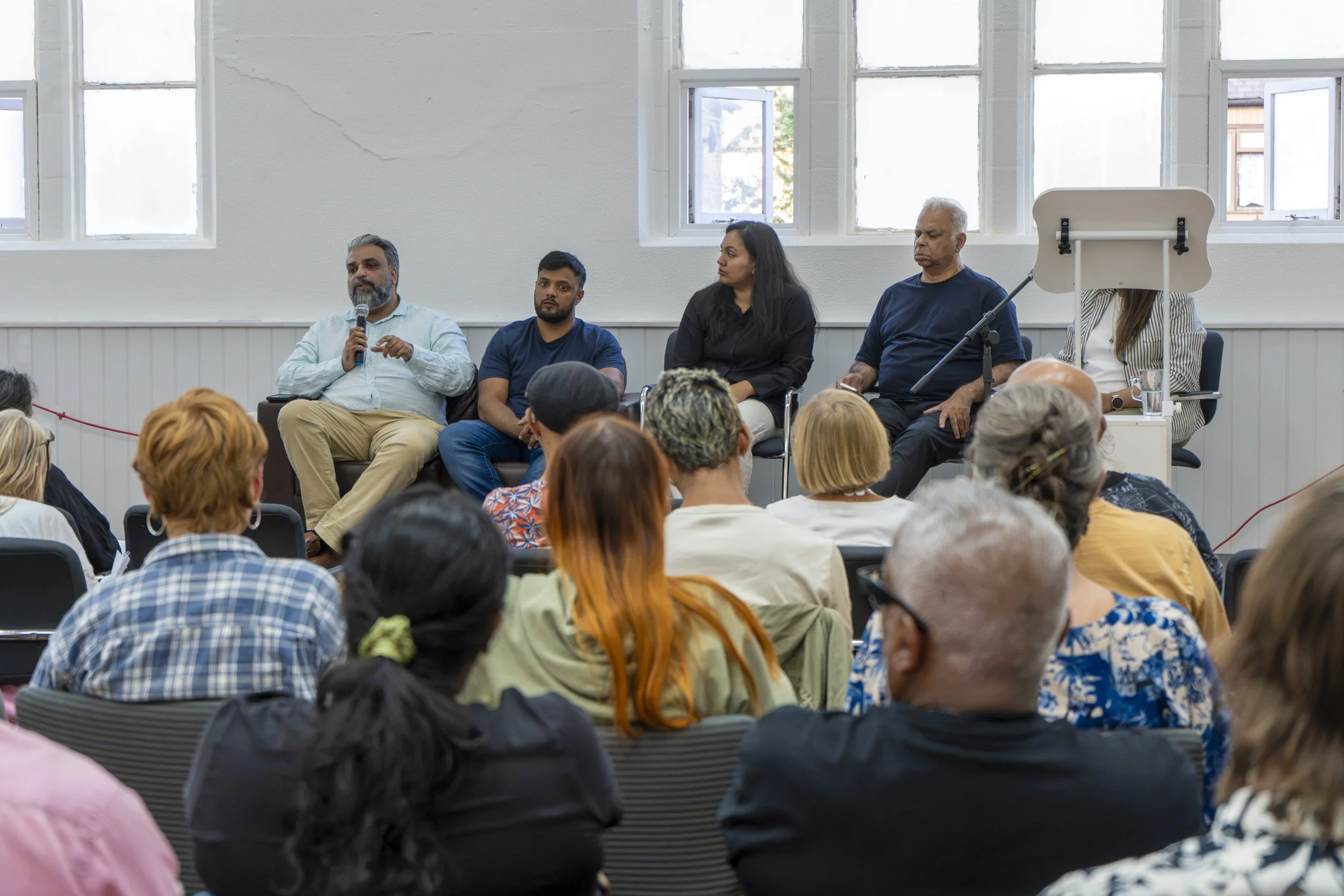
Attendees and guest speakers at the Nottingham Solidarity Network event
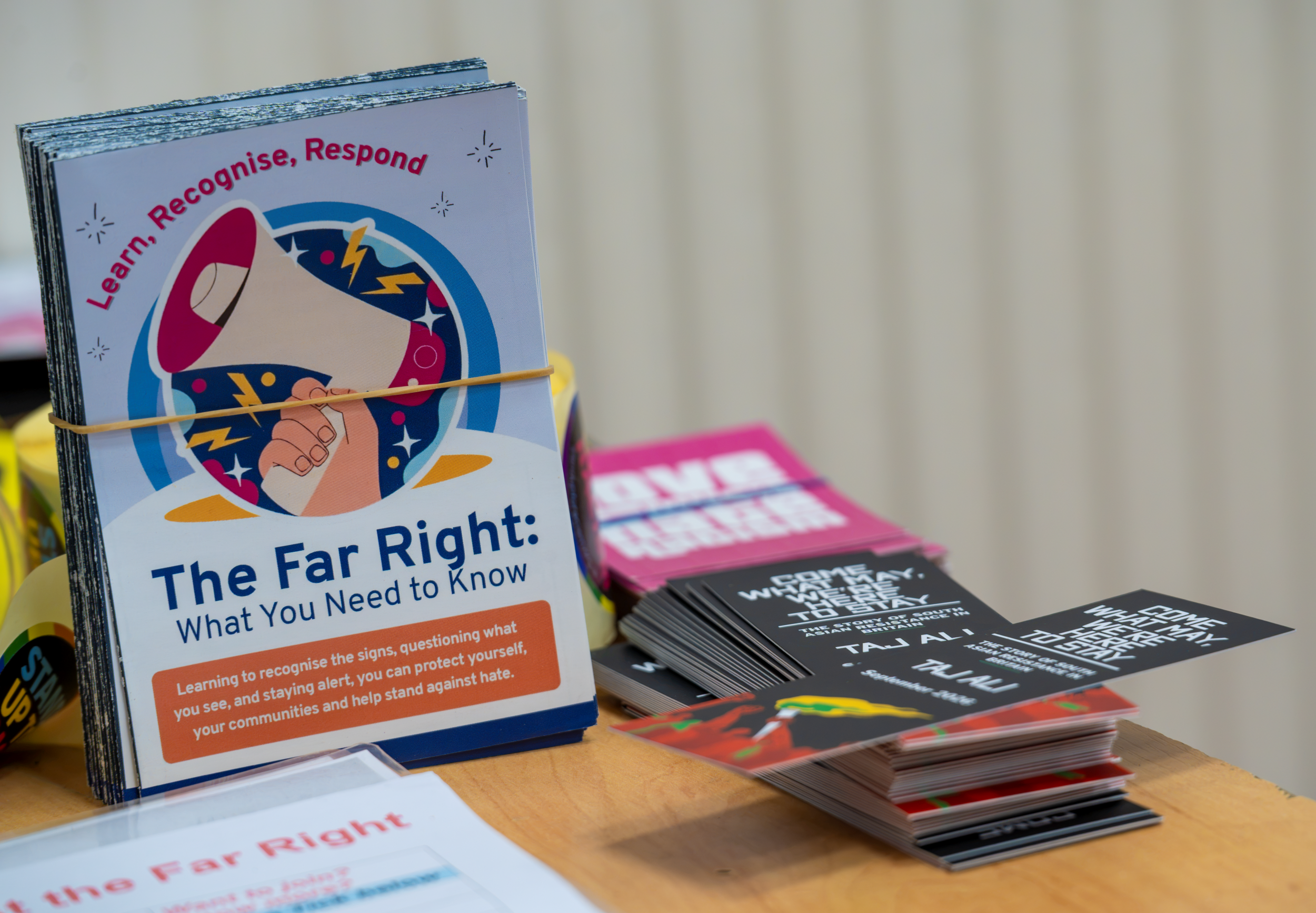
Leaflets available at the Nottingham Solidarity Network meeting on the threat of the Far-Right
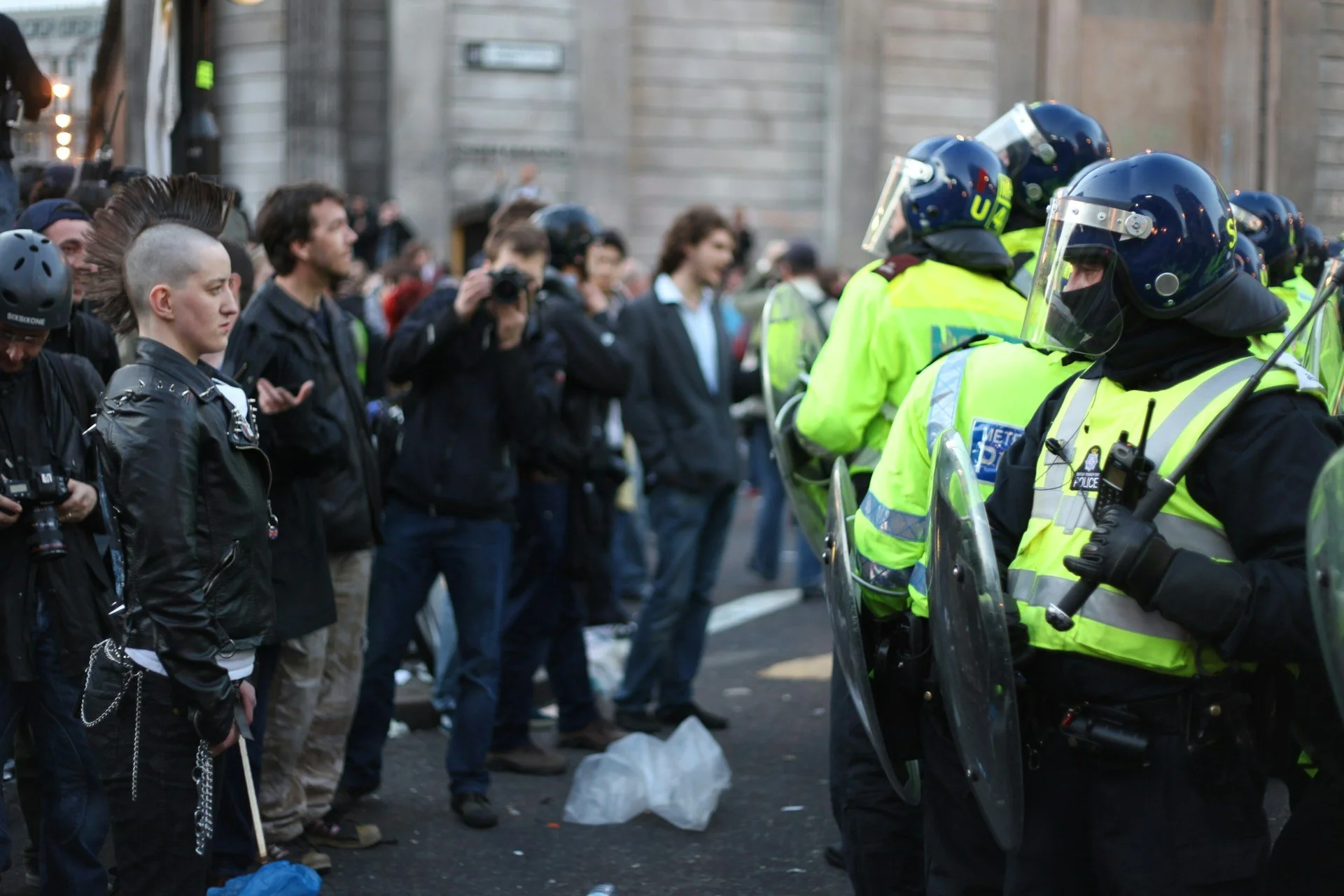
Special report: England 2024 riots and the cycle of racist violence
A recent study published by the Institute of Race Relations (IRR) finds that policy and prosecutorial responses to the summer 2024 riots that followed the brutal killings of three little girls at a dance class in Southport, downplayed the level of anti-immigration racism and Islamophobia in favour of a narrative that focussed on “mindless thuggery”. The IRR warns that the obfuscation of the causes and consequences of the riots, now risks legitimising further far-right mobilisation and vigilante violence.
The IRR commissioned criminologist Dr Jon Burnett to study government, policy and prosecutorial responses to the summer 2024 riots because of concern that the violence was being treated as a simple public order matter — ‘thuggery’ across the ‘ideological spectrum’– bypassing both the serious nature of the racist violence in England and its root causes.
In Racism’s Echo Chamber: Government, Criminal Justice and the Summer 2024 Riots report, a sample of 126 cases that went through the courts from August 2024 to December 2025 were analysed with each case compiled via information gleaned from a variety of sources including national and local newspapers and, where publicly available, transcripts of judges sentencing remarks.
In line with IRR’s particular focus on the racial dimension of policing, prosecuting, charging, convicting and sentencing, the IRR sought to examine, first, whether the “riots” were a break with or a reflection of mainstream talking points around race, religion and immigration and, second, the impact of the government narrative of “thuggery” on prosecutorial and judicial decision-making.
Dr Jon Burnett sampled two cohorts of cases. Sixty seven percent of the sample involved people who were charged in relation to anti-migrant mobilisations. Thirty three percent involved BME, mostly young Muslim defendants, who did not initiate the riots, but reacted to them.
The study finds that:
The riots gave rise to widespread fear in racialised communities.
Though the riots were not solely caused by the far Right, they were exploited and manipulated by them.
Some of the accused justified their actions by utilising variations of slogans used by successive governments such as “Stop the Boats”; others accused the government of aiding and abetting an “invasion”.
The government has failed to take serious account of the causes and consequences of the riots, but, instead, linked the riots to violent disorder, “thuggery” across the political spectrum.
Far too often, the context within which defendants responded to racist provocation and racist violence was not sufficiently understood in the courtroom.
In terms of BME, including Muslim, defendants reacting to the riots, examples are provided of cases where people faced charges related to defending themselves or others from violence or the threat of violence. In some cases, judges failed to consider, given defendants’ testimony, whether a guilty plea should have been considered “equivocal”. In some cases, judges commented to the effect that, “Racial abuse is unpleasant, but you should have risen above it”.
The IRR report questions whether judicial decision-making was influenced by the contested theory of cumulative extremism and the popularised but misleading myth of “two-tier justice” thus creating bias against individual defendants.
The report also draws attention to the treatment and prosecution of vulnerable people who were swept up in the riots such as homeless people, those struggling with various addictions, those who had grown up in care, or who had experienced significant violence and loss.
Dr Jon Burnett said:
“While the forces underpinning the riots are complex, in multiple cases the ideological positions embedded in people’s justifications for violence echoed the ideological positions of government policies over time, politicians or media narratives more generally”.
IRR director Liz Fekete adds:
“What emerges from the binding narrative of defendants who participated in the riots could be compared to the distorted confines of an echo chamber”.
“Unless society comes to terms with the deeper causes of anti-migrant, Islamophobic and racist violence we will be caught in a vicious cycle of events that repeatedly reinforce each other, with the prospect of ugly protests and riots forming an infinite loop”.
Also welcoming the report:
Zrinka Bralo, CEO of Migrants Organise said: “This report makes plain that the riots of summer 2024 were not a surprise or an exception. Migrants Organise members continue to live fear in hotels, while charities and community organisations can no longer safely publish their addresses because of threats and intimidation. Hostility is not a failure of the system – the system is hostile by design, and it is doing exactly what it is meant to do. The political rhetoric of ‘control and order’ restoration will deepen injustice, normalise fear and further erode the democratic values it claims to defend and hand over the power to the far right.”
Andrea Coomber KC (Hon.), Chief Executive of the Howard League for Penal Reform, said: “This important research shows that the causes of the 2024 riots, the demographics of people pushed through the criminal courts, and the lessons to be learned in the aftermath, are all more complex and nuanced than has hitherto been understood, particularly by the government.
“The ‘two-tier justice’ narrative that swiftly developed is particularly misleading, as the report’s analysis of cases demonstrates. Instead, and as with the riots in 2011, both government and the courts prioritised a ‘one-size-fits-all’ response of speedy prosecutions and punitive sentencing, an approach that swept up many vulnerable people from across different backgrounds – many of whom did not initiate the violence. Among other things, this helped exacerbate the prison capacity crisis that has dogged the government since the general election.
“Just as the courts failed to consider the vulnerable nature of many of those caught up in the disorder, the report is right to say there has been little reflection from government on how to prevent future riots by tackling the underlying causes of social and economic deprivation. The same could be said of much else when it comes to crime and our failing justice system.”
Rajiv Menon, KC said: “This important report by the Institute of Race Relations documents the widespread racist, anti-migrant violence that divided communities across England in 2024 and the wholly inadequate response of a government and a criminal justice system incapable of addressing the role of racism in the riots. It is essential reading for all those committed to building communities of resistance and solidarity during these worrying times.”
*This article first appeared on the IRR.org.uk website.